Showing posts with label Housing and property. Show all posts

Tuesday, 1 November 2016

Tips For Refinancing Our Home Loans

Home loans... this is a major part for a property owner in Singapore. If you had bought a private property, you can only take a bank loan whereas for a HDB property, we can choose between a bank loan or a loan from HDB. 

Bank loans are structured in a way where if we do not refinance regularly, we will lose out on a lot of cost savings and end up paying more for our housing loan instalment. Many banks do not reveal that to you. It is like credit cards where they give you waiver of annual fees for first few years and start charging you later if you do not realise it. Some are smart enough to call in and cancel the card or request the fees to be waived. Others will end up paying the extra fees unknowingly.
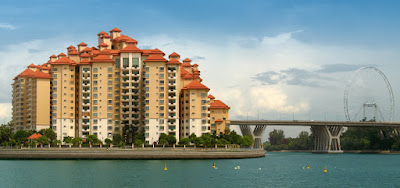


How does bank loan work? 

For every loan package, there is a spread applied to the interest rate. If it is a sibor package, it will be something like "sibor + 0.8%". I've talked to many people before and some don't realise the rate that they are paying now is just temporary. Most of the time, after a few years (likely 2-3 years), the spread will increase. Instead of  0.8%, the spread increases to 1.2%. Some can even increase as much as 1% which is a significant amount on our loan installment. It will be a shock when we realise we have to pay a few hundred or thousands more per month later. 

Here are some tips on refinancing and when we should do it:

You should refinance as early as 6 months before lock in expires

Refinancing should not be done only when we see an increase in our loan instalment after the spread increases. We should refinance and get a better package even before our lock in expires. Yes this can be done and it can be done as early as 6 months before. 

The reason to refinance before lock in expires is simple. The minimum notice period for refinancing is 3 months which means if we only refinance after our lock in period expires, where the loan instalment will be higher, we will be stuck with the high interest rates for at least 3 months. 3 months can be a few thousand dollars paid in extra by then. 

The different variable rates to choose from

For loan packages, there are both fixed and variable rates. For variable rates, there are different options to choose from again. This is the confusing part for many people and sometimes I have to explain for quite awhile before people can understand the options available. 

For variable rates, there are mainly 3 types:
  1. Bank's board rate
  2. Sibor/SOR rate
  3. Fixed deposit mortgage rate
As mentioned earlier, for home loans, there is a spread. For variable rates, it will be pegged to either one of the above variable factors. Thus, it can be either "board rate + 0.8%" or "sibor + 0.8%" or "fixed deposit mortgage rate + 0.8%". 

For bank's board rate, this is the most NOT transparent among the 3 types. The bank can change the rate as and when they want and then tell you your loan instalment will be higher the next month. There is no way we can check or see the rate for this. 

For sibor/sor rates, it is transparent and all banks follow the same rate. However, the rate can change quite a lot base on historical figures. It was as high as 8% in 1987, 7%+ in 1998 and almost 4% in 2007. Every financial crisis causes the sibor to fluctuate quite badly. 

For the fixed deposit mortgage rate, this is a relatively new type as compared to the bank's board rate or sibor/sor rate. This is also a transparent rate as it is pegged to the fixed deposit rate and we can see the rate published on the website of that particular bank. Many people are sometimes confused that this is a fixed rate. It is not a fixed rate. This rate is also less volatile as compared to the sibor based on historical figures. In any case, increasing the fixed deposit rate does not benefit the bank as it is also a cost to them.

Fixed rates only for short period of time

If your loan is on fixed rates, do not believe that your rate is fixed forever. There is no such thing as a long term fixed rate which means if you want fixed rates for longer term, you should refinance regularly. Most fixed rates are for 2-3 years with some extending to 5 years but that's about it so far from what I have seen among all the banks in Singapore. 

Once your fixed rate ends, it will revert to a variable rate so it is better to refinance to get fixed rates again. 

Should I switch from HDB loan to bank loan?

So far, we have discussed mostly on bank loans. If you're on HDB loan, the interest is 2.6% whereas if we switch to bank loans currently, it can be as low as 1%. However, switching to bank loans will have a huge consequence. The main issue is we would not be able to switch back to HDB loan once we go over to bank loans. 

HDB loans, although it is higher at 2.6%, but it is liken to a long term fixed rate as the rate has not changed for a long time. If we want more stability, we should stay on HDB loan.

However, if our loan is left about 5-10 years, we can consider switching to bank loan to take advantage of lower interest rates and not worry too much since the loan is going to end soon. 

What are the fees for refinancing?

Refinancing is not free. There are fees involved which we should take note of. However, if our loan amount is high, the banks will always give cash rebates or subsidies to cover most of the fees. 

The fees for refinancing are as follow:
  1. Valuation fees
  2. Legal fees
  3. Mortgage stamp duty 
In most cases, cash rebates and subsidies can cover most of the cost which means we only need to pay less than a few hundred. Do note that all fees can be paid by CPF so no cash is needed as long as we have enough in our CPF Ordinary account. 


Where to get the best loan package for refinancing?

If you would like to find out more about refinancing and get the best rate for your home loan, fill in this form below and I'll get back to you on the best rate:
I will also be giving out vouchers as below for every confirmed case:


Loan amount $200K-$300K: 

$20 CapitaLand or NTUC Vouchers

Loan Amount $300K-$500K: 
$40 CapitaLand or NTUC Vouchers

Loan Amount $500K-$800K: 
$60 CapitaLand or NTUC Vouchers

Loan Amount above $800K: 
$80 CapitaLand or NTUC Vouchers

Enjoyed my articles? 
You can Subscribe to SG Young Investment by Email 
or follow me on my Facebook page and get notified about new posts. 


Thursday, 11 August 2016

This Will Cause Us To Be Poorer Each Day

What makes a person poorer each day? Is it his daily expenditure? His compulsive spending habits? His indulgence on food? You may be surprised that getting poorer is not so easy. Spending money on food, buying clothes etc will not make us that much poorer. To be honest, how much can you spend on food or buying clothes?

In April this year, I wrote an article declaring that I will stop tracking my daily expenses. In the past, I used to track every single spending I had in an APP but it wasn't that useful for me. Yes it made me conscious of my spending and I did save a lot of money but that is not what I want to live my life on. Being too frugal can have an adverse impact on our lives instead.

Now, I only track my expenses on a monthly basis and I found that even after I stop tracking my daily expenses, the effects are not that much of a difference, only a slight increase except for a month where I went overseas.


Expenses has gone up over the years and I'm actually happy that it has happened. The irony is when expenses went up, my income went up as well.

Now, back to what will cause us to be poorer each day. The answer is LOANS. There are many different types of loans or what we call as debts but some of them work differently from each other. Let's look at some common loans and see whether will they actually make us poorer?


Car Loans

Car loans is quite common in Singapore. Due to the high price of cars now, how many people can actually affoed to pay that $100,000+ in cash for that car?


SGCarMart has a good new car loan calculator which i'm using for the below illustration:

New Car Model: Toyota Vios 1.5 Elegance
Car Price: $104,888
Loan Amount: $73,422
Interest Rate: 2.28%
Loan Tenure: 7 Years

From the above example, the monthly instalment will be $1014. Total interest paid at the end of 7 years will add up to $11,718. This is 11.17% of the original car price. This is still 2.28% per year even though we are paying a monthly instalment whic reduces the outstanding loa amount. This is because car loans interest are always calculated base on the initial loan amount instead of the remaining loan amount


Housing Loan

Housing loan is even more common in Singapore. We can choose not to have a car but we need to have a roof over our heads. For this illustration purpose, I'll be using a mortgage calculator from MoneySense.

Price of HDB flat: $340,000
Loan Amount: $306,000
Interest Rate: 2.6%
Loan tenure: 25 years

For the above example, the monthly instalment will be $1388.23. Total interest paid at the end of 25 years will add up to $110,468.61. This is 32.49% of the property price value.

The interest paid is quite scary to be honest. This means if your property price is not more than $416,469 in 25 years and you sell it, you'll be making a loss instead. Nevertheless, if we calculate the average interest paid yearly, it is only about 1.29%. This is because housing loan interest are amortised. This means the interest is calculated based on the remaining loan amount yearly as compared to a car loan which calculates interest base on the initial loan amount.


Credit Card Debt

Credit card is not considered a loan but it is a debt if we missed the payment or did not pay the bills on time. Let's see how credit card interest is calculated and what happens if we did not pay the bills.

Credit Card debt: $1000
Interest rate: 24% p.a (2% per month)
Years of Owing: 3 years


Base on the above example, if we did not pay a single cent on the amount owing, the $1000 debt would grow to $2000 in 3 years. This is double of the initial amount of $2000. The reason why it doubles is because interest is compounded on a monthly basis. To calculate how long it takes for your credit card debt to double, you can use a simple method called the rule of 72. By using 72 divided by the credit card interest rate per annum, you will get the number of years which the credit card debt will double. In the above example, it is 72 divided by 24 which is 3 years.

Another thing to note about credit card is if we were to make partial payment, the payment paid will be used to pay for the interest first before it is used to pay for the outstanding amount. For example if the credit card debt is $10,000 and interest is $240 per month, if we just pay $240, the initial debt of $10,000 will not reduce at all. We are just paying interest every month for as long as it goes without reducing the debt amount.

Conclusion

Loans or debts can cause us to be poorer without us realising it. Our daily expenditure or spending money on food or clothes can be consciously tracked but for loans, it is sometimes hard to visualise exactly how much money we actually pay for the interest.

For the 3 different loans, all 3 of them work differently:

  1. For car loans, the interest is base on the initial amount
  2. For housing loans, the interest is base on the reducing balance
  3. For credit card debts, the interest is base on the outstanding amount compounded monthly

Before committing to a loan, we should know how much interest we are paying. For debts, we should not get into any in the first place as it can be very hard to get out base on the example above.

Make the right financial choice today!

Enjoyed my articles? 
You can Subscribe to SG Young Investment by Email 
or follow me on my Facebook page and get notified about new posts. 

Monday, 30 May 2016

9.5% Interest On Savings Account? Good Or Bad For Us Now?

POSB which was known as Post Office Savings Bank in the past has the highest interest ever recorded at 9.5% on 1 August, 1981. How many of us were there during that time to remember this historical high interest rate era? For me, I was not born yet but history shows me how interest rates have moved from the past to now. With such high interest, I can only imagine how fast my money would compound and grow over time. But, do you know that with this kind of high interest, it is actually not that good for us also?

Will Higher Interest Rates Be Good Or Bad For Us?

One thing we would be interested to know is if high interest rate is good or bad for us? If we were living in the 1970s-1980s, higher interest rates may not be that bad for us in Singapore as most people do not have huge loans back then. Fast forward to now, most people have huge housing loans coupled with car loans and also student loans.

In the past, we could get a decent 4 room HDB flat for a family of 4 at just ~$50,000. If we take a loan for this $50,000 at an interest of 3% for 25 years, the total interest we would have paid is about $21,000. Now, to get a 4 room HDB flat would cost about $350,000 and more if in a mature estate. Let's suppose we take a $350,000 loan at 3% for 25 years, how much would be the total interest paid? The answer: ~$147,000.

I do not know if you think that $147,000 is a significant sum of money? To me, it does sound quite significant. If interest rates increase, it will have a much bigger impact to us in Singapore where a large proportion of the population has at least one housing loan.

On the other hand, high interest is good for people who have a lot of savings in the bank. In the 1980s, this announcement by POSB was common:

Announcement * POSB Has Raised Its Interest Rates On Savings * 7% p.a. On Deposits Up To $100,000 * 5%p.a. On Deposits In Excess Of $100,000 * All Interest Earned Is Tax Exempt.
Post Office Savings Bank, 1980s
7% interest on the first $100,000 is quite a lot of interest. You get $7000 for $100,000 of savings per year. From 1974 to 1986, interest n deposits was mostly above 5%. If you had a lot of savings back then, these 12 years would have been very good for you. Your money would have doubled without any work.


How interest rates affect our investments and life?

Stocks

A rise in interest rates is a cost to businesses that have a lot of debt. Having to pay more for their debt will result in lower profits. This is something we need to take into consideration when we invest. On the other hand, businesses that lend money out such as banks will benefit from the rise in interest rates.

Bonds

A rise in interest rates will cause prices of bonds to drop. Bond prices and yield are inversely related. Those who have bond funds in their portfolio should watch this space carefully as it is expected that bond prices will drop as interest rates goes up.

Bank Deposits

How about those of us who have savings in the bank? Yes increase in interest rates may mean that we will get higher interest in our savings with the bank but do take note it may be a slow progress as banks will not increase deposit rates fast. It is a cost to them and with banks in Singapore still cash rich, there is no apparent reason for them to increase it fast to attract more customers.


I have plotted out the comparison between SIBOR and the average bank's fixed deposit rate from the data by MAS. The SIBOR is a good benchmark for housing loan rates as most housing loans are on the SIBOR rate. The bank's fixed deposit rate is the interest we get if we put into the 12 month's fixed deposit. Recently, there are also housing loan package based on the fixed deposit rate which I will explain more in this post.

Click Image to Enlarge


Interest rates have fallen over the decade from 1987. It is still near zero currently. Some countries even have negative interest rates where they charge a fee if we put our money in the bank. This doesn't sound right does it?

I do not have the data of the SIBOR from 2013 to 2016 plotted on the chart but from records, the 3M SIBOR is at the 1% range now. Most banks have a spread of about 1% on the loan package so this means those who are on SIBOR loan packages are paying about 2% or more interest now.

The rise in SIBOR will affect most people in Singapore. Then the question is, how much can the SIBOR move? Let's take a look back in 2004.

Sibor started moving up in 2004, rising to above 1 per cent. It rose to a peak of 3.5625 per cent in the middle of 2006. There were 17 Fed fund hike increases by the Fed from June 2004 to June 2006, hitting 5.25 per cent in June 2006. The Sibor is closely correlated to the US Fed funds rate, so any expectations of a hike there would move interest rates here higher.

From 2007 to 2014, the Sibor begun its 7 year fall. It rose again recently in 2015 and is expected to rise further on expectations the Fed fund rates will rise again. The federal reserve in the US raised interest rates just recently and is expected to raise interest at least another 2 times this year. The next rate hike may be as early as June in a few weeks time.


Watch Out For Your Home Loan Instalments

Over the past few months, many people have emailed me and said that they receive letters from the bank informing them that their home loan instalment has increased. What can they do about it?

The easiest way is to refinance and find a lower interest rate package. The best is we should go for fixed rates at least for the next 2-3 years. The last interest rate spike was from 2004 to 2006 which lasted for 2 years only. If we see from historical trends from the previous chart I plotted out, most of the spikes in interest rates lasted only about 2-3 years.

However, the problem with fixed rates is that it is higher than variable rates which may not be as attractive. The alternative to fixed rates is to go for a variable rate package pegged to the fixed deposit rate. Not all banks offer this option though. It is interesting to note that when SIBOR spiked from 2004 to 2006, fixed deposit rates remained mostly unchanged.

We cannot guarantee that fixed deposit rates will be unchanged in the next round of interest rates rise so if you are considering to go for a fixed deposit mortgage loan, it is better to go for a no lock in package. This means you can still switch out anytime in the event if the rate really increases.

Now, the issue is with so many banks in Singapore to choose from, which is the one that offers the best loan package and if you go to the bank, the staff from the bank will definitely say his or her's is the best one.

I've come out a solution for all readers of my blog. I will personally advise you if you are interested to get the best loan package regardless if its for a new property you're going to purchase or for your existing property which you want to refinance. I have the rates of all the banks in Singapore and will help you compare for the best housing loan package for your individual needs. Select one of your enquires below to fill in a contact form and I'll get back to you shortly:

Is the increase in interest rate affecting you in a good or bad way? We can be prepared for this and even take advantage of it. Rates are near zero now and the only way for it to go is up. 

Enjoyed my articles? 
You can Subscribe to SG Young Investment by Email 
or follow me on my Facebook page and get notified about new posts. 

Wednesday, 24 February 2016

Your Complete Guide To Buying A Property In Singapore

Buying a property can be confusing for many first time buyers in Singapore. What should we do first and how should we find the property we desire? With so many rules governing the property market, it takes some knowledge to be able to make the right decisions. Making the wrong decisions can be costly where we end up forfeiting the property if we cannot get a loan or can't afford to continue paying for the property along the way.


With this, I will try to write down the step by step procedures to buying a property in Singapore and give you some tips which will get you the best cost savings for your property purchase.  Let's start off with the first step: Searching for a property.

Property Hunting

Do I need a property agent in order to search for a property to buy? This may be a question that is on many property buyers' mind. Gone are the days where we need to rely solely on property agent's expertise to find us a property. We can be our own property agent these days. How can we do it?

Simple... we have online platforms where we can find properties easily. One such platform is from SRX property. I can key in the area where I'm interested, the property type, the price and even any MRTs or Schools which I want the property to be near to.


Once you click search, one whole list of properties which match your criteria will appear and you can select the properties which you're interested in. You can see the price of the property, a virtual tour of the entire property and other important information such as price per square foot etc.

There are other platforms such as property guru which also offers similar search engines for property hunting. If you find a property agent to search for the property for you, you will have to pay some extra money. Most property agents charge an average of 0.5%-1% of the property price. Searching on platforms is completely free of charge.


Accessing your affordability - Can I Afford A Loan?

So now, you may have found some properties which you're interested in but can you afford it? Accessing your affordability is the most important part of the property buying process. Nowadays, it is very difficult for anyone to buy a property with cash. Most of us have to take a loan for it.

Getting a loan can be tricky with all the cooling measures in place. Did you know since 2010, the government has introduced about 8 cooling measures to cool the property market? We need to know these before we can make better decisions for our property purchase.

The amount of loan we are eligible for has been reduced by a significant amount. We can only borrow a maximum of 80% of the property price and still have to meet an income requirement. This is know as the Mortgage Servicing Ratio (MSR) for HDB flats and the Total Debt Servicing Ratio (TDSR) for private properties and HDB as well.

The MSR is set at 30% of our gross monthly income. This simply means that if our income is $4000, the maximum loan instalment we can have per month for housing loans is $1200. The MSR is for the purchase of HDB flats. HDB flats are also subjected to the TDSR which is set at 60%. This simply means that if our income is $4000, the maximum loan instalment we can have per month is $2400. TDSR includes housing loans, car loans, student loans, credit card debts etc.

If you're still confuse about the cooling measures and how much loan you can get, try the free calculator here.


The Buying Process - Step By Step Guide

After searching and accessing if you can afford the property, its time to take action to buy the house of your dreams. Here I will let you understand more on what you should do to make your property purchase a smooth sailing one and provide you the procedures which you can follow.

HDB (BTO)

Buying a HDB BTO is not much of a problem since HDB will definitely guide you along for this. The Home Loan Eligibility (HLE) letter is the key for HDB BTO if you intend to take a HDB loan.

For the application of HDB BTO, here's the timeline:

  1. Check your eligibility to buy, eligibility for HDB or bank loan and check your finances.
  2. Submit application during 1 week application period through HDB website or any HDB branches or HDB hub
  3. Notification of ballot results will be out in 1.5 months for BTO
  4. If you're successful in the ballot, after 1 to 2 weeks, you will be invited for an appointment to book a flat
  5. If you intend to take a HDB loan, you need a valid HLE letter during the booking of flats
  6. The signing of agreement of lease will happen within 4 months after you book a flat. You are required to submit the letter of offer (LO) if you are taking a bank loan. 
  7. Your BTO flat will be ready in about 3 years time

For the bank loan, you can get the LO through an approval in principal (AIP) with any of the banks in Singapore. I can also do the AIP for you with the bank. Just contact me and I'll guide you along.

BTO Tip: If you're looking out for a BTO soon, you can subscribe to a free alert service by HDB here

HDB (Resale)

For HDB resale, the buying process is between you and the seller of the HDB. A property agent may be involved in the process with a law firm compulsory to execute the transactions.

Here's the time line for buying a HDB resale flat:

  1. Before purchasing a resale flat, check how much loan you are eligible for. You can engage the services of a mortgage broker or approach the banks for assistance. 
  2. Do an approval in principal (AIP) with the bank before you sign the option to purchase (OTP) with the seller. Most AIP are valid for 1 month.
  3. Get OTP. You need to pay $1000 at this stage
  4. You have only 2 weeks to decide whether to exercise the OTP to buy the property before it expires. Your LO for the loan must be out within this 2 weeks. If you already did an AIP previously, then you don't have to worry about this. 
  5. Exercise OTP to buy the property
  6. Agent will receive 1st appointment date from HDB
  7. After 1st appointment with HDB, HDB will fix 2nd appointment date
  8. Before second appointment with HDB, you should proceed to law firm to sign all mortgage documents and pay legal fees, COV.
  9. OTP ends 8 to 10 weeks, 2nd appointment at HDB to collect keys

Private Properties (New/under construction)

For private properties which are under construction, these are the properties you buy directly from the developer during sales launch. Here's the timeline for it:

  1. Do an approval in principal (AIP) with the bank
  2. Get OTP. At this stage you need to pay 5% of the purchase price
  3. Within 1 week, developer will send out sales and purchase (S&P) agreement to law firm or buyer
  4. You should have LO from the bank for the loan within 3 weeks of S&P date to sign the S&P. You need to pay 15% of purchase price and stamp duty at this stage
  5. OTP will end in 8 to 10 weeks

Private Properties (Resale)

For resale private properties, here's the timeline:

  1. Do an approval in principal (AIP) with the bank
  2. Get OTP. At this stage you have to pay 1% of purchase price
  3. You have 2 weeks to decide whether to exercise the OTP to buy the property before it expires. Your LO for the loan must be out within this 2 weeks. If you already did an AIP previously, then you don't have to worry about this. 
  4. Exercise OTP to buy the property
  5. 1 week before collection of keys, sign mortgage documents, CPF documents and pay 4% of purchase price and stamp duty
  6. OTP ends 8 to 10 weeks, collect keys

Tips on buying a property

After researching and writing on topics related to property since 2014, I've got to learn much more about property purchase over the years. From what I see, buying a property isn't the main issue but the issue is with getting the loan approved. Getting a loan is an integral part of purchasing a property in Singapore.

There are currently more than 16 banks in Singapore all with different loan packages and interest rates. When we get the option to purchase (OTP) for the property, do take note that we only have 2 weeks to produce the letter of offer to exercise the OTP. This is a very short time to get the loan approved although it is possible but it will result in a lot of anxiety and stress because of the tight timeline. Thus, before buying a property, it is important to do an Approval In Principal (AIP) so that we know our loan eligibility and get the approval for the loan as well. 

Another thinf tk note is if we do the AIP with bank A, we will be getting the loan from bank A as well. If we want to get the best rates for our loan package, then we should apply the AIP with the right bank right at the start. But, with so many banks to choose from, how do we know which has the best rates? 

I do have tie up with all the banks in Singapore and I know which bank has the best rate for home loans. I have also screened through a selective group of bankers to provide you the best and most efficient service. Furthermore, I also have tie up with various law firms in Singapore to help you save on your legal costs. If you would like to do an AIP for your new property purchase or get a new home loan, you can email me at sgyi@homeloanwhiz.com.sg. I can also advise you on your loan eligibility. You can click on this LINK for more information on the service I provide. 


Buying a property can be a fuss free experience in Singapore if we know the procedures for it. We definitely do not want to be caught off guard and add to our stress and anxiety when owning a home should be an enjoyable process.

Take action and equip yourself with the knowledge in property purchase today!

Enjoyed my articles? 
You can Subscribe to SG Young Investment by Email 
or follow me on my Facebook page and get notified about new posts.

Related Posts:
1. Refinancing Your Housing Loan To Fixed Rates When Interest Rates Are Rising
2. Can I Buy A Private Property If I Own A HDB?

Wednesday, 27 January 2016

Should We Use All Our CPF for Housing or Save It for Retirement?

Most of us know CPF can be utilised for housing. Now comes the question if we should use all our CPF for housing? I have written a few articles on CPF before and got interested in it when a colleague shared with me how he manage to amass quite a huge sum of money in his CPF accounts by the time he was age 55. The irony was, he was not really a high income worker, earning an average of about $2k-$4k a month throughout his lifetime. He had more than $600K in his CPF accounts just before the age of 55 and he has recently just retired from work once and for all. Furthermore, he has a fully paid up HDB flat in Bishan and is still able to accumulate a significant sum in his CPF accounts.

Some of us may say its impossible to have more money for retirement now because housing prices have risen by a substantial amount. Some of us may say it’s impossible to have more money for retirement now as compared to the 1980s or 1990s because housing prices have risen by a substantial amount. According to HDB's website, the price index of HDB resale flats have risen by about 2.5-3 times. It’s true that housing prices are higher now but our salary have also risen much more than the past.

The CPF system was created to help Singaporeans take care of their retirement, housing and healthcare needs.  If we empty it, we will certainly not have enough for retirement. Let's see what we can do to balance between paying for a house and saving up for retirement.  

CPF accounts earn up to 5% interest (Below age 55)

Most people max out their Ordinary Account (OA) monthly savings in their CPF for housing. Is this a wise thing to do?  Our CPF savings earn us a risk-free interest of 2.5% per year on our OA, and 4% on our SA & MA. The first $60,000 of the combined balance (of which $20,000 comes from OA) will earn an additional 1% interest per year. If I just do a simple calculation and take $50,000 and grow it in the OA, how much would the amount be 30 years later? The answer, about $104,878. The amount which was left inside the OA and not used for housing would have grown more than 2 times. We don't even have to contribute more and the money just grows by itself. This is the power of compound interest.

CPF accounts earn up to 6% interest (Age 55 and above)

Furthermore, CPF members aged 55 and above will also earn an additional 1% extra interest on the first $30,000 of their combined balances (with up to $20,000 from the OA) from January 2016. This is paid over and above the current extra 1% interest that is earned on the first $60,000 of their combined balances.

You can refer to the below infographics to know how much interest you can earn from your CPF accounts;


Optimising OA and SA

One thing we have to take note is when we buy a house using a HDB loan, the savings in our OA will be wiped out to pay for housing. If we have $50,000 in our OA, all will be wiped out to pay for our house and the remaining will be paid in instalments monthly. We will have lesser for retirement and the amount can be quite a significant amount due to the power of compounding. $50,000 earned in the OA at 2.5% for 30 years would have grown to $104,878. This is more than twice of the initial amount.

There is an easy way to build more money for our retirement. If we take a HDB loan for our house, the required down payment is only 10%.  Let's say we buy a $300,000 HDB flat, the down payment is $30,000. If we have a combined OA balance of $80,000 with our spouse, and we take a HDB loan, all our monies will be wiped out to pay for the housing cost if we do nothing.  However, if we decide to build more for retirement and we transfer $50,000 to our SA and leave a combined balance of $30,000 to pay for the down payment, we will easily have more money for retirement.

Just by doing the above, the $50,000 would have grown to about $195,084 in 30 years’ time if we transfer the $50,000 from our OA to SA. This is $145,000 more for our retirement which is quite a significant sum of money. However, do take note there is a limit to the amount that can be transferred from OA to SA, and that the transfers are irreversible and we cannot use the savings in our SA to pay for housing.


Continued use of CPF savings for housing payments after turning 55

This is a common question which people have. Some are shocked when they realise they don't have enough money in their CPF to pay for housing after turning 55. As most housing loans will stretch for 25 years, if we buy a house after the age of 30, there is a high probability that we will still have to continue paying the monthly housing mortgage after the age of 55.

55 years old is the time where we can take out our CPF money subject to the basic retirement sum. However, there are a lot of people who have concerns whether they can use their CPF to continue paying for their housing loan after 55 years old.

Yes, we can use our Retirement Account (RA) savings (excluding top-up monies, interest earned, and any government grants received) above the Basic Retirement Sum and OA savings (including future contributions to the OA) to pay for our property, subject to the applicable housing limits.

When we turn 55, an RA will be created. The savings from our SA and/or OA will be transferred to the RA. If we wish to continue using CPF savings to pay for housing loan instalments, there are three options we can explore:
  1. Apply to reserve some savings in our OA from being transferred to our RA before we turn 55, so that we can use them for housing after turning 55; 
  2. Use our new CPF contributions to our OA (if we continue working after 55);
  3. Apply to use our RA savings above our BRS.
The BRS is in place to ensure we have enough for retirement. We do not want to end up having a house to stay but no food to eat. This is known as asset rich but cash poor. 

Limits on using CPF for housing

Before we even think about using all our CPF for housing, it would be good to know that there are limits on the amount of CPF savings we can use. Using all our money in the OA for housing would possibly mean lesser for retirement. Hence, the housing limits, Valuation Limit (VL) and Withdrawal Limit (WL), are in place to ensure we have enough for retirement. Let's take a closer look at what VL and WL are.

Below is a table from CPF website to show the application of  VL and WL:

Loan From
Type of Home
Applicable Limits
Conditions to use CPF beyond VL
HDB
New flat
No limit
None. You can use your CPF until the loan is fully paid.
Resale HDB flat/DBSS flat
VL
Below 55 years old
To set aside the current Basic Retirement Sum (BRS) in your Special Account (SA)* and Ordinary Account (OA).

55 years old and above
To meet the BRS in your Retirement Account (RA), SA* and OA.
* including the amount withdrawn for investment.
For bank loan, you can only use your CPF up to WL.
Bank
New HDB flat/Resale HDB flat/DBSS flat
VL and WL

Here's a nice info graphic to help you calculate VL and WL:


Conclusion

CPF can be used for housing but there are certain limits to how much we can use so as to ensure we have sufficient for our retirement needs. The power of compounding interest is what makes a lot of people richer and if we just have a little knowledge and leave some money in our CPF accounts, we would surely have more money for retirement.

To me, it is pointless to be asset rich and cash poor. If we buy a big house but have nothing left for retirement, it would be a very sad thing at the end of our golden years where we are supposed to be enjoying life more. Plan ahead, think far and our lives could be much better in the future. 


Monday, 25 January 2016

Refinancing Your Housing Loan To Fixed Rates When Interest Rates Are Rising

Interest rates are rising and is still rising. Back in 2013, I started to write about the possibility of a rise in interest rates which will hurt people who are over-leveraged on debt. That was a time when interest rates were at a very low level due to QE from the US. When they started to reduce and then stop the QE, interest rates started to rise.


Home Loans Rates will be affected immediately

The rise in interest rate will affect most of us who have home loans with the banks currently. The effect is felt almost immediately with many banks starting to revise their home loan packages one by one. No longer will we see home loan interest rates of less than 2% soon. Previously, many people switched from HDB loan to bank loan to take advantage of the low interest rates which was only 1%+. With their CPF OA giving interest at 2.5% and them paying less than 2% for their mortgages, many would have benefited from switching.

However, did you know the average historical interest rates is about 3.5%? The rates will be going in that direction and probably will reach 3.5% very soon. This is also a rate set by MAS when calculating the total debt servicing ratio (TDSR). Our central bank wants to ensure people are still able to service their loans even when interest rates rise to 3.5% which is the average historical rate we should be looking at too.


The rise in SIBOR and bank's board rate

The SIBOR and board rate are 2 of the most common variable loan packages in Singapore. If you're not sure which loan package you are on, chances are you are also on the SIBOR or board rate packages. This is because if you do not refinance your housing loans, your loan package will automatically be changed back to the variable rate package even if you are on fixed rate previously.

Recently, UOB and Maybank separately announced to their customers that they will be increasing their board rate. Maybank announced that their board rate will increase by 0.25% effective 18 February 2016 and UOB announced their board rate will increase by 0.5% from 15 February 2016.

The 3M SIBOR has also increased from 0.25% in 2011 to 1.25% just last week. This is already a 1% increase in interest rates.


Revision of Fixed rate packages in Singapore

Fixed rate packages are not spared either. Banks in Singapore have been removing and revising their fixed rate packages in Singapore since the past few months. The revision has gone up by as much as 0.5%. Most fixed rate packages in Singapore are already at more than 2% versus the 1.68% which I saw just a few months ago.

Refinancing to fixed rate packages is the best thing to do in a rising interest rate environment. While most fixed rate packages are already above 2%, there is still have a good fixed rate package which is below 2% but this will end by 31st January 2016.

If you would like to refinance to a fixed rate package that is still below 2%, you can email me at sgyi@homeloanwhiz.com.sg. I will advise you personally on the package and also process the application for you. Here are the services I provide as a mortgage consultant in Singapore: http://sgyounginvestment.blogspot.sg/p/mortgage-consultancy.html

A point to note is if your home loan package is still under a lock in period, you can refinance now to get the good rates as long as the lock in will finish within 6 months. You will not incur any penalty charges. If you wait till the end of your lock in period, by then most of the home loan rates would have been revised upwards.


Mortgage loans are one of the largest expenses which most Singaporeans would have. If we can just save a few hundred a month by refinancing, it will definitely make us more financially well off. For a $400,000 mortgage loan with interest at 2.6%, we would be paying $10,400 in interest alone in one year only. Time to take action before its too late. The good home loan packages will be gone very soon.

Enjoyed my articles? 
You can Subscribe to SG Young Investment by Email 
or follow me on my Facebook page and get notified about new posts.

Related Posts:
1. Fixed Deposit Home Rate - The Alternative Interest Rate To SIBOR
2. Prepare To Pay Higher For Your Home Loans If You Do Nothing
3. Should Couples Buy A 5 Room HDB Flat For Their First BTO Application?

Tuesday, 19 January 2016

Can I Buy A Private Property If I Own A HDB?

In the past, there were many people who bought private properties and made a lot of money when they sold it at a much higher price later. Some bought condominiums while some bought landed properties. Private properties are a good form of investments where we can buy it, rent it out or sell at a higher price later. Previously, I wrote that "Your HDB Flat Is Not Really An Investment". This is different for a private property where private properties are generally considered as an investment asset.

It will be almost impossible for most of us to buy 2 condominiums at once and stay in one while renting the other one out. It is too expensive for most people. Now, if I tell you that there is a possibility that we can buy a private property even if we own a HDB, will you be interested? Yes, you can actually own a HDB and still be eligible to purchase a private property. In this post, I will share with you the different ways of how it can be done and also the restrictions to take note of.

Credit: https://www.flickr.com/photos/erwin_soo/8083007078/


How Can I Buy A Private Property If I Own A HDB?

Fulfilling the MOP

To buy a private property when you already own a HDB flat, the first condition you have to meet is to fulfil the Minimum Occupation Period (MOP). The MOP for HDB is 5 years which means you have to stay in your current HDB for 5 years before you are allowed to purchase a private property. This is only applicable for Singapore citizens.

If you are a Singaporean PR, there is no way you can buy a private property while keeping your HDB flat. You will have to sell your flat within 6 months of acquiring your private property.


Restrictions to take note

While it is possible to buy a private property while keeping your HDB, there are certain cooling measures which the government impose to prevent housing prices from going up too fast.

Loan to value ratio for second property and above

The loan to value ratio or LTV is the amount of loan you can get from the bank for that particular property. If the LTV is 90%, it means you can borrow up to 90% of the price of the property with only 10% down payment.

Here's the various LTV for first, second and third and subsequent properties:

1st Housing Loan:

LTV 80% for loan tenure up to 30 years and till age 65 years old. Minimum 5% upfront cash payment, 15% down payment can be paid by CPF

LTV 60% for loan tenure above 30 years and/or above 65 to maximum 75 years old. Minimum 10% upfront cash payment

For 1st housing loan, it is quite straight forward and not much cash is needed for the purchase. All the examples I am using is assuming the loan is from a bank. If you take a loan from HDB for the purchase of HDB flats, the LTV is 90% with no minimum upfront cash payment.

Let's continue to 2nd Housing Loan:

LTV 50% for loan tenure up to 30 years and till age 65 years old. Minimum 25% upfront cash.

LTV 30% for loan tenure above 30 years and/or above 65 to maximum 75 years old. Minimum 25% upfront cash payment

As you can see, the LTV reduces drastically for the 2nd housing loan. If you own a HDB and buy another private property, you may be subjected to this reduction of LTV. But, there are circumstances where you still can get 80% LTV. I will go more into details below.

3rd and subsequent Housing Loan:

LTV 40% for loan tenure up to 30 years and till age 65 years old. Minimum 25% upfront cash.

LTV 20% for loan tenure above 30 years and/or above 65 to maximum 75 years old. Minimum 25% upfront cash payment.


How To Buy A Second Property and still get 80% loan?

As you can see above, for 2nd housing loan, the LTV reduces to 50% and there is a minimum upfront cash of 25% needed. If you buy a $800,000 private property, this is $400,000 down payment with $200,000 cash needed. There is a way to overcome this.

The key to getting 80% loan for your second property is to make it a first housing loan instead of second housing loan. The keyword is on the housing loan. Simply said, if you own a HDB and have already fully paid off all your loans, then when you get a loan for your private property, it will be considered as first housing loan. The number of loans is taken into consideration for the LTV, not the number of properties. In this way, you can own a second property while still be able to get the full 80% loan.


Additional Buyer's Stamp Duty

Another thing to take note is the additional buyer's stamp duty (ABSD).

Here are the various ABSD for different groups of people depending on the number of properties you own:

Singapore Citizens

1st residential property: NIL
2nd residential property: 7%
3rd and subsequent residential property: 10%

Singapore PR 

1st residential property: 5%
2nd residential property: 10%

3rd and subsequent residential property: 10%

Foreigners

1st residential property onwards: 15%


Total Debt Servicing Ratio

Throughout my mortgage consultancy work, TDSR is the most confusing part for most people who want to buy a property. This is also the pain point where a lot of people who want to buy a private property find out that they actually can't afford the loan.

The current TDSR is 60% which simply means you cannot use more than 60% of your gross monthly income to service your loans. This is inclusive of all loans from housing, car, credit cards, student loans etc.

From this, we can calculate out the maximum loan eligibility for each individual. This is very confusing for a lot of people and it won't be easy to calculate. If you need help to calculate your loan eligibility for the purchase of a HDB or private property, you can email me at sgyi@homeloanwhiz.com.sg. You can also email me if you need to take up a new home loan or refinance your housing loan. I provide this service on a complimentary basis. More details of my service here.


Yes you can buy a private property if you own a HDB. It may be a good investment for those who are thinking to go into property investment. You don't have to sell your HDB and buy 2 condominiums in order to rent it out. Can I buy a private property if I own a HDB? Yes you can!

Enjoyed my articles? 
You can Subscribe to SG Young Investment by Email 
or follow me on my Facebook page and get notified about new posts.

Related Posts:
1. Fixed Deposit Home Rate - The Alternative Interest Rate To SIBOR
2. Prepare To Pay Higher For Your Home Loans If You Do Nothing

Monday, 21 December 2015

Why young Singaporeans don’t need to worry about buying their first HDB Home in Singapore?

Almost 2 years ago in February 2014, I wrote an article on "How much money does a couple need to earn in order to afford a $300,000 HDB flat?" and it went viral. Buying their first home seems to be a concern among young people in Singapore. Is it really that scary to own a house as a young person living in Singapore? It is actually not so scary if we know what to do and how to buy a house which we can afford comfortably. Owning a house should be an enjoyable process and not a stressful situation which we put ourselves into. So what can we do to make owning a house in this high housing price era more enjoyable? Let me show you how it can be.

Paying For the Down Payment of A New Home

All of us would know that we can use our CPF to buy a house. The down payment for a house is 10% for HDB which means any of us who buy a $300,000 HDB flat would need to come up with $30,000. This is certainly quite a huge sum of money for young couples who want to own their own home. For couples, saving up for their wedding, the renovation works and the honeymoon is already stressful enough. Thankfully, we do not have to save up additionally for the down payment of a house because CPF has automatically saved it for us.

A young person, age 35 and below, earning about $2,500 a month in Singapore would have about $20,000 in his CPF OA account within 3 years of working. 23% of his/her salary is contributed to the CPF OA every month by himself and by his/her employer.  The money in CPF OA can be used for housing which can be used to pay the down payment of a house. Together with his or her spouse, one can safely afford the down payment of a house within 3 years of working.


I started working early in my life right after my National Service. After working for 5 years, I already had more than $60,000 in my CPF accounts in total. I did not start out with a high salary, only $1,700 per month when I just started working and CPF actually helped me accumulate quite a good sum of money. Now, I don't have to worry about housing cost. The savings which I have accumulated can be used for other stuffs such as wedding and renovation costs.

Paying For the Monthly Instalment of A New Home

Besides using CPF for the down payment of a new home, young couples can also use CPF to pay for the monthly instalment of their home. A couple earning $2,500 will have $575 contributed to their CPF OA each. Together, they have $1,150 every month from their CPF OA to pay for the monthly instalment of their new home. If they buy a home within their means, they don't even have to fork out extra cash to pay for the housing loan.

If we buy a home at $300,000, after 10% down payment, we'll need to take a loan of $270,000. The monthly instalment for a $270,000 loan with HDB at 2.6% for 25 years will be $1255 per month. Now, this is still about $100 more than what a couple with combined income of $5000 would have in their CPF Ordinary account.

However, if we and our spouse have a combine income of $5500, the monthly contribution to our OA would be more than sufficient to pay for the housing loan instalment for a $300,000 HDB flat. The instalment will still be $1255 while this couple their combine CPF contribution in their OA is $1265. This is more than enough to pay their housing loans fully by CPF without the need to come out any cash.

Furthermore, there are additional measures to help young Singaporeans in owning their first HDB home a more fuss free experience. Let's take a look at the last part below on the subsidies which we'll be able to get.


CPF Housing Grants for a New Home

For BTO HDB Flats

I've researched and summarised the grants available for a new HDB home. This is for first time applicants only. The special housing grant only applies to 2 room, 3 room and 4 room flats in non-mature estates only. 


Average Monthly Household Income Over 12 MonthsAdditional CPF Housing GrantSpecial CPF Housing Grant (Not applicable for 5 room HDB)Total Grants
Up to $1500$40,000 $40,000 $80,000
$1,501 to 2,000$35,000 $40,000 $75,000
$2,001 to 2,500$30,000 $40,000 $70,000
$2,501 to 3,000$25,000 $40,000 $65,000
$3,001 to 3,500$20,000 $40,000 $60,000
$3,501 to 4,000$15,000 $40,000 $55,000
$4,001 to 4,500$10,000 $40,000 $50,000
$4,501 to 5,000$5,000 $40,000 $45,000
$5001-$5500Nil$35,000 $35,000
$5501-$6000Nil$30,000 $30,000
$6001-$6500Nil$25,000 $25,000
$6501-$7000Nil$20,000 $20,000
$7001-$7500Nil$15,000 $15,000
$7501-$8000Nil$10,000 $10,000
$8001-$8500Nil$5,000 $5,000

The CPF Housing Grants will be fully credited into the CPF Ordinary Account of the Singapore Citizen (SC) first-timer applicant, who must be listed as a co-applicant. No cash is disbursed. For a couple applying for the HDB together. each applicant will receive half of the full grant amount.

We can get as high as $80,000 in CPF housing grants. That to me is quite a substantial sum of money. Even if you and your spouse have a combined income of $8000, you would still be eligible for the Special CPF Housing Grant if you are not purchasing a 5-room HDB.

*For more information on the CPF housing grants for first timer applicants, please refer to HDB website here

For Resale HDB Flats

If you don't have time to wait for a BTO flat, you can also apply for a resale flat. Resale flats are known to be more expensive than HDB flats but not to worry, there are some other grants to help in this cost.

Family Grant

The grant available for this scheme is $30,000. To be eligible, your household income must not exceed $12,000 (revised from $10,000 before 24 August 2015). You must be a Singaporean and form a family nucleus with another Singaporean or PR. This grant is only available for first time home buyers.

Additional CPF housing Grants

The additional CPF housing grants is similar to that for the BTO applicants as below:

Average Monthly Household Income Over 12 MonthsAdditional CPF Housing Grant
Up to $1500$40,000
$1,501 to 2,000$35,000
$2,001 to 2,500$30,000
$2,501 to 3,000$25,000
$3,001 to 3,500$20,000
$3,501 to 4,000$15,000
$4,001 to 4,500$10,000
$4,501 to 5,000$5,000

Proximity Housing Grant (New from 24 August 2015 onwards)

Under this scheme, you can receive $20,000 in grant.

The eligibility criteria is:

Your parents/ married child are:
  • living with you in the resale flat
  • living in an HDB flat in the same town or within 2km
  • owner-occupants of private property in the same town or within 2km

The above grants definitely come in handy to help subsidise the housing cost for first time home buyers. Grants are disbursed into our CPF accounts for our housing needs.

Should I Buy The Biggest HDB Available?

More often than not, I've heard suggestions to buy the biggest HDB flat as early as possible or even on their first home. But, is this a wise advice for young couples? For a fuss free home ownership experience, I strongly believe we should buy a HDB flat within our means.

In Singapore, loans for HDB flats are limited to 30% of our gross monthly income. This is the mortgage serving ratio (MSR) set by the MAS to make sure home owners do not over stretch their finances. If we lose our jobs or should interest rates increase, the MSR of 30% will make sure we can still service our loans.

CPF also has a First Home Calculator to help home owners calculate and make sure they do not overstretch their finances. If you're planning to buy your First Home, you can check out the calculator here.

Another point to consider is that our first home is actually not an investment but a liability. This is because even if you sell the house you're staying in, you still need to buy another house to live in. If you're planning to buy a property for investment, your first home should be bought conservatively so as to save up capital for a second investment home.

Do young people have to worry about buying their first HDB home in Singapore? For me, I can say that when the time comes for me to apply for my first home, I do not have to worry much at all. The money in my CPF account is more than enough to cover all the necessary cost for my first home. Furthermore, with the CPF housing grants, the experience of owning a home will be much better.

Enjoyed my articles? 
You can Subscribe to SG Young Investment by Email 
or follow me on my Facebook page and get notified about new posts.

Related Posts:
1. Should Couples Buy A 5 Room HDB Flat For Their First BTO Application?
2. The 3 Big Decisions in Life - Marriage, Buying a House and Retirement

Tuesday, 15 December 2015

Your HDB Flat Is Not Really An Investment

It is very hard to make money on your HDB flat. By this, I'm saying about the first HDB flat you buy. Many people treat the home they are staying in as an investment where they are willing to put in money and pay a lot for the mortgage every month.


Is it really worth it to buy the largest HDB flat and think we could make money from this in the future? Let me show you why your HDB flat is not really an investment.

Why Buying The Largest HDB Flat May Not Make Sense?

More expensive and lesser grants

Your first home is for you to stay. Spending more money to pay for housing loans means you will have lesser for retirement or for your expenses.

The recent BTO launch at Bidadari (Toa Payoh) attracted quite a lot of attention. The location is good and so is the price higher. Let's take a look at the prices of the different flat sizes at Bidadari for the recent launch:
  • 3 Room - $297,000 - $385,000
  • 4 Room - $433,000 - $550,000
  • 5 Room - $544,000 - $625,000
As we can see, the prices are definitely higher than areas like Punggol. If we buy the largest HDB which is the 5 room flat, as compared to the 4 room, we need to fork out an additional $100K for it. Furthermore, there are lesser grants for 5 room flats as compared to 4 room flats. I'll write more about the grants in another article coming up next. In general, we could lose out up to $40,000 in grants if we buy the biggest HDB flat.

The monthly instalment for a $450,000, 4 room flat and a $550,000, 5 room flat will be as below:

4 Room Flat: $1838/Month
5 Room Flat: $2246/Month

The above scenario is assuming a 90% loan and 25 years loan tenure at 2.6% interest from HDB loan. As we can see, buying a 5 room flat will set us back with $408 lesser a month. This will add up to $122,400 in total for 25 years.

Higher resale levy

I think a lot of couples buy the largest HDB flat because they think they can make more money from it when they sell it and buy another BTO. This may be true in the past but its not true currently. For a 5 room HDB flat, if you sell it either to upgrade or downgrade, the resale levy imposed is higher than that of a 3 room or 4 room flat.

Here's the resale levy payable:

First Subsidised Flat TypeResale Levy Amount
2-room$15,000
3-room$30,000
4-room$40,000
5-room$45,000
Executive$50,000

A resale levy is payable on these conditions as quoted from HDB website:

  • You sell your subsidised flat after meeting the Minimum Occupation Period (MOP), and then buy a second subsidised flat from HDB or take over ownership of a subsidised HDB flat
  • You sell your subsidised flat after meeting the MOP, and then buy an EC from a developer where the land sale was launched on or after 9 December 2013, including those where tenders were not closed, i.e. Westwood Avenue, Canberra Drive and Anchorvale Crescent

You need not pay a resale levy if you are buying any of these:

  • Design, Build and Sell Scheme (DBSS) flat from a developer
  • EC from a developer; where the land sale was launched before 9 December 2013
  • HDB resale flat
  • Private residential property

Why A HDB Flat Is Not Really An Investment?

HDB is a leasehold property for only 99 years

All of us know that HDB has a lease of 99 years. What are the implications of this? It is confirmed by the minister of national development during a 2014 parliament seating that at the end of 99 years, HDB's asset value will depreciate to zero. 

In fact, we don't really have to wait until the end of 99 years to feel the impact of it. By the time your HDB is left with 60 years or less, the banks will limit the loan tenure which one can borrow if they purchase that flat. This means, if you want to sell your HDB flat with 60 years or less lease, you will have some problems as your potential buyers may not be able to qualify for the bank loan. With additional cooling measures such as the TDSR, MSR, it makes it even harder to get the loan. 


Your money is stuck in the HDB

All the money you pay for your HDB is stuck there until you sell it. If you sell it, you still have to buy another house to stay in and you need to pay a resale levy if you buy another subsidised flat. There is little chance where you will be able to get any extra cash out if you sell your HDB. 

If you had instead bought a smaller flat to stay in, the extra cash or CPF you have would earn interest which will compound over the years. CPF gives interest as high as 5% while your cash can generate investment returns if you invest it. 

It is better to buy a smaller flat if you're planning to stay in it and save up more for another investment property later. 

You cannot cash out of your HDB flat but you can for private property

There is no way for you to cash out of your HDB or mortgage it for any other purposes. The banks do not recognise it as an asset. For a private property, you can take an equity loan or term loan and use the cash for other uses. This is also called cashing out of your property. 

Let's compare between a $600,000 HDB and a $600,000 private condominium. For the private condo, you can take an equity loan of about 70-80% of the property value minus the outstanding mortgage you have and any CPF utilised. For the $600,000 condominium, you can cash out about $480,000 at an interest of the current property loan packages available which is less than 2%. This is the lowest you can get as compared to other loans such as car loans, business loans or personal loans. You can use this cash to start a business or even use it for investment. You cannot do this for a HDB flat at all. For a $600,000 HDB, your money is stuck inside without you being able to cash out.

*If you're planning to cash out of your private property, you can email me at sgyi@homeloanwhiz.com.sg for a complimentary consultation. I would be able to advise you on the best rates and process your application for you. 

Conclusion

The primarily purpose of HDB is to provide affordable housing to Singaporeans so that each of us have a roof over our heads. Treating HDB as an investment and wanting to make money from it may not be the wisest choice as the government will do all they can to limit speculation in the subsidized public housing market. This is to ensure public housing remains affordable for the majority of Singaporeans who want to own their own homes and start a family.

Buying a smaller flat for your first home will make owning a house a more fuss free experience so that we will have more money in the future should we want to have another investment property or use the extra money for other investment purposes.

Enjoyed my articles? 
You can Subscribe to SG Young Investment by Email 
or follow me on my Facebook page and get notified about new posts.

Related Posts:
1. Can You Afford That Million Dollar Condominium?
2. How Much Loan Can You Get For Your HDB flat?
3. Is It Necessary To Refinance Our Housing Loans?